If you have started house hunting in Yakima, you have probably noticed something quickly: one home has a big wraparound porch and detailed trim, while the next is a simple ranch or a newer infill build on a smaller lot. That variety can feel exciting, but it can also make it harder to decide what fits your budget, maintenance comfort, and long-term goals. The good news is that Yakima’s housing mix tells a clear story once you know what to look for. Let’s dive in.
Yakima Home Styles At A Glance
Yakima is still mostly a detached single-family home market, but it includes more variety than many buyers expect. According to the City of Yakima’s draft Comprehensive Plan 2050, the city had 38,584 housing units in 2024, with about 61% single-family detached homes, about 16% small multifamily housing, and about 18% larger multifamily housing.
The city’s housing stock also spans many decades. About 20% of residential structures were built after 2000, while about 63.1% were built 40 or more years ago. That mix helps explain why you can tour a detailed early-1900s home in one part of Yakima and a simpler newer build in another.
Yakima’s growth pattern also shaped its homes. The city notes that Yakima developed along the Northern Pacific Railway line and grew from agricultural roots, which is part of why the local housing stock includes both older character homes and later suburban forms.
Historic Yakima Homes You May See
Queen Anne Homes
If you picture a home with historic charm, Queen Anne is one of the clearest examples in Yakima. City records and historic surveys describe these homes as having asymmetrical rooflines, bays or towers, rich trim, wraparound porches, and a layered look from mixed materials.
These homes are often two to two-and-a-half stories, though smaller cottages also exist. If you love ornate details and strong curb appeal, this style often stands out right away when you drive by.
Craftsman And Bungalow Homes
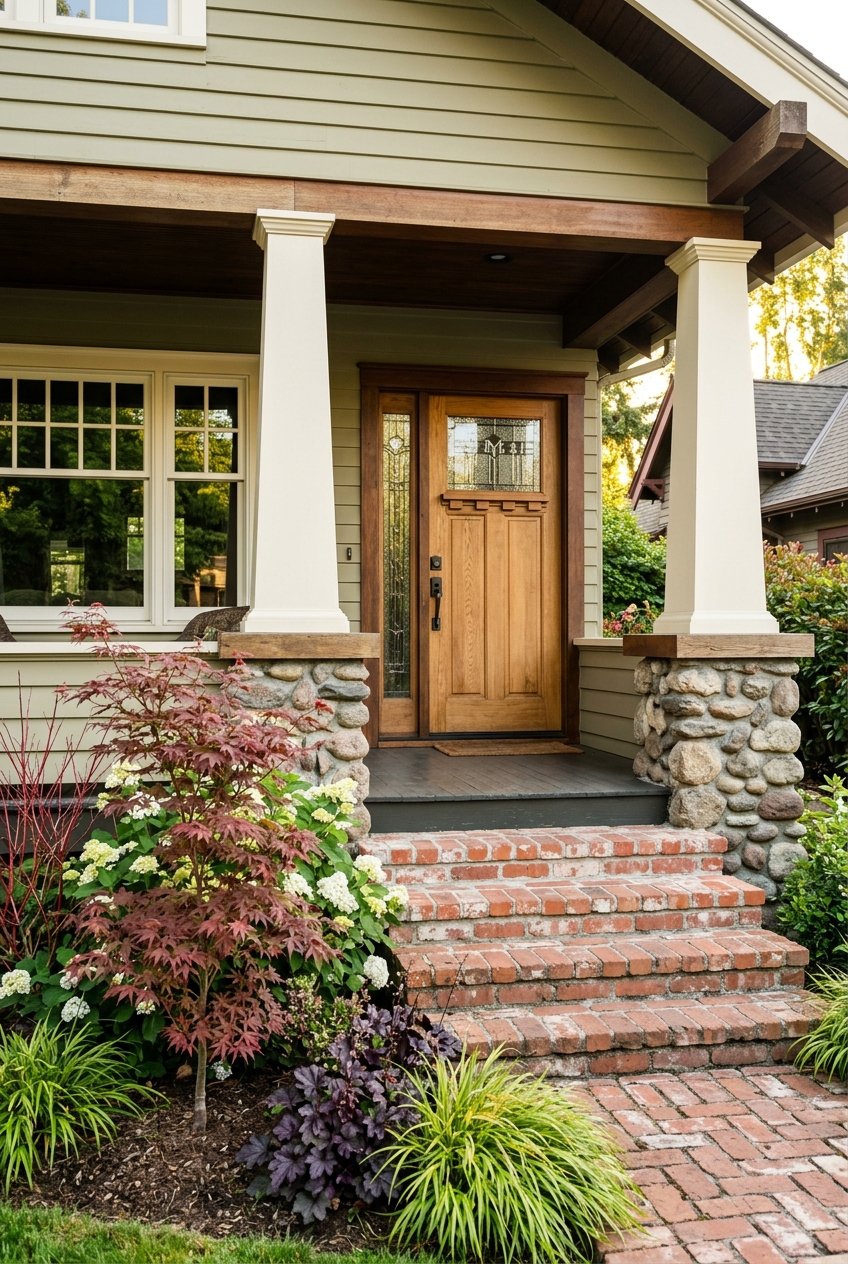
Craftsman and bungalow homes are a major part of Yakima’s older housing stock. Yakima’s historic survey describes bungalows as compact, affordable homes that are usually one to one-and-a-half stories with gable or hipped roofs.
For many buyers, this style hits a sweet spot between charm and function. You may see original wood details, inviting front porches, and practical layouts that still feel warm and timeless.
American Foursquare Homes
Some older Yakima homes have a boxy shape that can be hard to name at first glance. Often, those are American Foursquare homes, which Yakima’s survey describes as large, boxy, two-story homes with four rooms per floor, hipped roofs, central dormers, broad eaves, and porches.
There is also a smaller “workingman’s foursquare” version that is more compact and symmetrical. If you want an older home with straightforward structure and historic character, this is a style worth knowing.
Colonial Revival And Classical Revival Homes
Yakima also includes more formal early-20th-century revival styles. Colonial Revival homes are usually more symmetrical, with double-hung windows, side-gabled or hipped roofs, and formal front entries.
In Yakima, these details do not always show up only on large homes. The city’s survey notes that classical details can also appear on smaller homes, including bungalows and foursquares, so listing descriptions may reflect a mix rather than a pure single style.
Tudor Revival And Style Blends
Tudor Revival homes bring a different look to Yakima’s historic inventory. The local survey describes them as having steeply pitched roofs, cross-gables, half-timbering, tall narrow windows, and large chimneys.
You may also see Tudor cottages in smaller one- to one-and-a-half-story forms. It is common in Yakima for homes to blend styles, so a house may include both Craftsman and English Revival details or Queen Anne and Colonial Revival elements.
Mid-Century Yakima Homes
Minimal Traditional Homes
As Yakima moved into the WWII and postwar years, many homes became simpler in form. Minimal Traditional homes, sometimes called WWII-era cottages, are described by Washington’s Department of Archaeology and Historic Preservation and Yakima’s survey as having close eaves, small or no front porches, front-facing gables, and large chimneys.
For buyers, these homes often feel less ornate and more straightforward from the outside. If you like an older home but do not want as much decorative detail, this style may be a practical middle ground.
Ranch Homes
Ranch homes became a major part of Yakima’s mid-century housing stock. Yakima’s survey says ranch houses began in the mid-1930s, grew in popularity in the 1940s, and became the dominant residential form in the 1950s and 1960s.
These homes are usually one story, asymmetrical, low-pitched, and horizontally oriented. Some include attached garages, and many buyers like them for their simpler circulation and more accessible everyday layout.
New Builds And Infill In Yakima
Yakima does not have just one “new build” look. The city’s Housing Action Plan points toward a more diverse mix that can include tiny homes, cottage homes, multigenerational homes, accessory dwelling units, manufactured homes, and other alternative housing types.
The same plan notes that attached housing can be allowed on smaller lots than standard detached homes. That means newer construction may feel more compact, more infill-oriented, or more flexible in design than Yakima’s older detached housing stock.
You may also see manufactured homes as part of the local housing picture. Yakima’s plan states that a new manufactured home can be placed wherever a single-family home can locate, consistent with state law.
How Lot Size Can Vary By Style
Lot size in Yakima often depends on when and where a home was built. The city’s housing plan discusses standard single-family lots around 6,000 square feet, while attached housing can be allowed on lots in the 3,500- to 4,000-square-foot range.
In practical terms, older Yakima homes may sit on compact city lots or on larger parcels tied to earlier suburban or orchard-style development. Newer infill homes usually trend smaller and denser, which may appeal to buyers who want less yard care.
For buyers looking at rural lifestyle or acreage properties around the Yakima Valley, lot size becomes an even bigger decision point. In those cases, it helps to think not just about the home style, but also how much outdoor upkeep you want long term.
Maintenance Matters In Yakima’s Climate
Yakima’s climate can affect how each home style lives over time. The city describes Yakima as semi-arid and sunny, with about 300 days of sunshine, about 8 inches of precipitation a year, dry summers, and common winter snow.
That matters because exterior paint, wood trim, roofing, irrigation, and landscaping can all require attention. On older homes with porches, siding, and mature trees, those items may be especially important to evaluate carefully.
In general, homes with more decorative exterior details often require more upkeep. Simpler mid-century homes and many newer builds may have fewer ornate features to maintain, which can be a meaningful tradeoff if you want a lower-maintenance option.
Historic Review For Some Yakima Properties
If you are considering a historic home, it is smart to understand the local review process early. The City of Yakima says listed properties can have exterior changes reviewed through a Certificate of Appropriateness process, and in some cases interior changes may also be reviewed.
The city also notes that its preservation program can support incentives such as Special Valuation. Properties on the Yakima Register can be at least 40 years old and significant for history, architecture, or cultural value.
Yakima also uses overlay tools in some areas to guide change. In the Naches Avenue Historic Overlay Zone, the city says the focus includes character-defining features such as lot size, building height, setbacks, streetscapes, and tree protection.
Which Yakima Home Style Fits You?
The right fit usually comes down to how you want to live, not just what photographs well online. A Queen Anne, Craftsman, Colonial Revival, or Tudor Revival home may appeal to you if you value character and are comfortable with more exterior upkeep.
A Minimal Traditional, Ranch, or many newer infill homes may fit better if you want a simpler layout, more predictable exterior care, or a more streamlined day-to-day experience. Neither path is better. It is about matching the home to your priorities.
As you narrow your search, it helps to ask yourself:
- Do you want historic detail or simpler design?
- How much exterior maintenance feels realistic for you?
- Would you rather have a larger lot or a smaller yard to manage?
- Are you open to newer infill or manufactured housing options?
- If a home is historic, are you comfortable learning the local review rules?
When you know those answers, Yakima’s variety becomes an advantage instead of a challenge. You can focus less on guessing what you are seeing and more on choosing the type of home that supports your budget, timeline, and lifestyle.
If you want help sorting through Yakima home styles, comparing older homes to newer construction, or figuring out what fits your goals best, reach out to Jeremy Sinnes. You will get clear local guidance and a smooth, data-informed process from a team that knows the Yakima market well.
FAQs
What are the most common historic home styles in Yakima?
- Buyers in Yakima often recognize Queen Anne, Craftsman, bungalow, American Foursquare, Colonial Revival, Classical Revival, and Tudor Revival homes in the city’s older housing stock.
What does a Ranch home usually look like in Yakima?
- In Yakima, Ranch homes are typically one-story, low-pitched, and horizontally oriented, often with asymmetrical design and sometimes an attached garage.
Are newer homes in Yakima all the same style?
- No. Yakima’s planning documents point to a mix that can include cottage homes, attached housing, accessory dwelling units, manufactured homes, and other infill-oriented housing types.
What should buyers know about maintenance for older Yakima homes?
- Yakima’s sunny, semi-arid climate makes exterior paint, wood trim, roofing, irrigation, and landscaping important items to review, especially on older homes with more decorative details.
What should buyers know about historic property review in Yakima?
- Some listed historic properties in Yakima may be subject to review for exterior changes through a Certificate of Appropriateness process, and certain designated properties may have interior review as well.
How does lot size vary across Yakima home types?
- Lot sizes can vary by era and location, with standard single-family lots discussed around 6,000 square feet in the city’s housing plan, while attached housing may be allowed on smaller lots around 3,500 to 4,000 square feet.