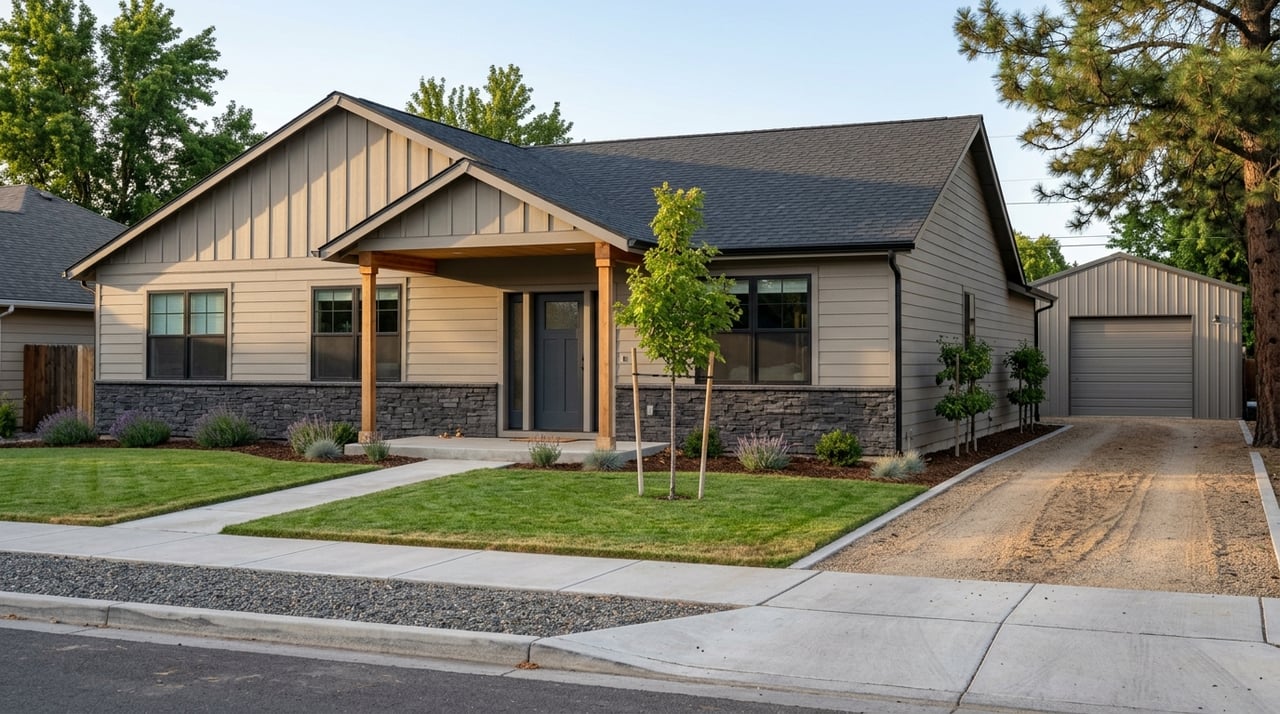
If you are trying to decide between acreage and in-town living around Yakima, you are not alone. This is one of the biggest lifestyle choices buyers make here, and the right answer depends on how you want to live day to day, not just what looks best online. In this guide, you will learn the real tradeoffs around space, utilities, commute, and upkeep so you can narrow your search with more confidence. Let’s dive in.
Why this choice feels different in Yakima
Yakima gives you two very different living experiences within the same market. According to the U.S. Census Bureau’s Yakima quick facts, Yakima city had 96,968 people in the 2020 Census, while Yakima County had 256,728, with a much higher population density inside the city than countywide.
That difference shows up in everyday life. In-town neighborhoods are generally more compact and service-oriented, while rural areas in the county spread across a much larger land base. The county’s transportation planning also notes that most of the population clusters around I-82, which helps explain why location and access can feel very different from one property to the next.
In-town living: convenience and connection
For many buyers, in-town Yakima living comes down to simpler daily routines. The City of Yakima says a utility account may include services such as domestic water, sewer, refuse, and irrigation, which can make budgeting and maintenance more straightforward.
Transit access can also be a practical advantage. Yakima Transit reports more than 700 bus stops throughout the city, with stops generally every two blocks along each route, plus the Yakima-Ellensburg commuter route serving route 11. If you want established streets, nearby services, and more transportation options, in-town living may fit your routine better.
In-town properties can also mean fewer moving parts when it comes to systems. You are less likely to spend time learning about wells, septic systems, shared access, or property-specific utility questions before you buy. That can be especially appealing if you want a smoother, lower-maintenance ownership experience.
Acreage living: space, privacy, and more responsibility
Acreage properties around Yakima attract buyers who want room to spread out. Yakima County’s land-use plan describes Rural Self-Sufficient areas as acreage homesites where a private lifestyle can be sustained, with lot sizes typically ranging from 5 to 20 acres.
That added space often comes with more privacy and a stronger rural feel. The same county planning language emphasizes preserving rural character, lower-density development, and compatibility with nearby farm and forest uses.
But more land usually means more site management. You may be dealing with wells, septic systems, irrigation, road access, open land, or neighboring agricultural activity in a way that is not usually central to a typical in-town purchase.
How agricultural surroundings affect rural property
Yakima County has a strong agricultural identity, and that matters when you shop for acreage. The county’s horticulture information says that more than 30% of county employment is tied to tree fruit, and it also notes that landowners with fruit trees have a duty under state law to maintain them.
That does not mean every rural property is a farm property. It does mean you may see orchards, farm-adjacent parcels, or open agricultural land as part of the setting. If you are drawn to country living, it is smart to understand how nearby agricultural uses may shape the property’s upkeep and feel.
Commute matters more than the map
Buyers often assume acreage always means a much longer drive. In reality, the commute can depend more on the exact road network than on whether the address sounds rural.
Yakima County’s transportation element identifies I-82 as the major route for travel within and through the county, along with important corridors like SR 97, SR 12, SR 24, SR 821, SR 823, and SR 22. Two homes with similar acreage can feel very different if one has easier access to a major corridor and the other sits farther out on a local road system.
The commute numbers support that idea. The Census Bureau reports a mean commute time of 17.8 minutes for Yakima city and 20.3 minutes for Yakima County overall. Those are broad averages, but they are a good reminder that you should judge commute time by the property’s exact location, not just the city name in the listing.
Utilities are often the biggest dividing line
The biggest day-to-day difference between in-town and acreage living is often utilities. Inside the city, services may be bundled through a city utility account. In more rural areas, the setup may involve county systems, a private well, a shared well, septic, or some combination.
Yakima County’s utility and health resources make it clear that rural utility questions need closer review. If a property uses septic, the county’s on-site sewage program handles permitting, review, inspection, and education.
For wells, the Yakima Health District says individual wells serving one home have the least oversight and are the owner’s responsibility to maintain and operate. The county also says homes on Group B water systems or wells are responsible for testing water and making sure it is safe to drink, with annual nitrate and coliform testing recommended.
Shared wells need extra due diligence
Shared wells can work well, but they require clear answers before you move forward. Yakima County says shared wells serve two homes, and the homeowners share responsibility for maintenance, repairs, and water testing.
That shared responsibility is important if you want predictable ownership costs and fewer surprises. The county also notes that sharing a well with a new structure, such as a residence or ADU, requires proof of a valid water right as part of the building permit process.
If you are buying acreage with long-term plans, this is the kind of issue that should be reviewed early. It may affect how you use the property in the future.
Road access and winter planning
Road access is easy to overlook until it becomes a daily issue. In town, you will usually see more established street networks and more transportation options. In rural areas, access questions can carry more weight.
Yakima County notes that county road maintenance includes roadway maintenance, bridge maintenance, drainage systems, and snow removal within county right-of-way. That means acreage buyers should confirm whether the road is county-maintained, private, or tied to an easement or shared-access arrangement.
This can affect convenience, maintenance expectations, and how the property functions during winter weather. It is one of the most useful practical questions you can ask when comparing rural homes.
Site conditions can change the ownership experience
Acreage living is not just about the house. It is also about the land and what comes with it.
Yakima County has wildland-urban interface regulations intended to reduce fire spread, which can matter on rural or edge-of-town properties. The county’s horticulture program also reminds landowners that fruit trees must be maintained.
These are not necessarily reasons to avoid acreage. They are simply part of the bigger picture. If you want more land, you should also be ready to evaluate the land’s upkeep, systems, and surroundings with the same care you give the home itself.
How to decide what fits you best
If you are still torn, try framing the decision around your daily life instead of the lot size alone. Ask yourself which tradeoffs will feel worth it six months after you move in.
In-town Yakima may be the better fit if you want:
- Easier access to city services
- More straightforward utility setups
- Transit options and established street networks
- Less property upkeep beyond the home itself
Acreage around Yakima may be the better fit if you want:
- More privacy and elbow room
- Space for outbuildings, hobbies, or open land
- A rural setting near foothills, ridges, terraces, or valley-floor areas described in the county plan
- A lifestyle that feels more independent, with the understanding that you may manage more systems yourself
Smart questions to ask before you buy
Whether you are leaning toward in-town or acreage, a few early questions can save you time and help you avoid the wrong fit.
Ask these questions as you narrow your search:
- What utility system serves the property: city water and sewer, county systems, a private well, a shared well, or septic?
- If there is a well or shared well, who handles testing, maintenance, and repairs?
- If you hope to add an ADU or second structure later, are there any water-right issues to review?
- Is the road county-maintained, private, or subject to an easement or shared-access agreement?
- Is the property near agricultural uses, fruit trees, or open land that may affect upkeep?
- What does the real commute look like using I-82 or other main corridors during your normal travel times?
These are the kinds of details that can turn a good-looking property into either a great fit or a frustrating one. A clear process and local guidance make a big difference here.
The right choice depends on how you want to live
Choosing acreage or in-town living around Yakima is not about which option is better overall. It is about which option fits your routine, your comfort level with property systems, and the kind of day-to-day life you want.
If you want help comparing homes, asking the right due-diligence questions, and finding the best fit for your goals, connect with Jeremy Sinnes. You will get practical, local guidance and a clear path forward, whether you are looking for convenience in town or space outside it.
FAQs
What is the main difference between acreage and in-town living around Yakima?
- In-town living usually offers easier access to city utilities, transit, and established streets, while acreage living often offers more land and privacy but may require more hands-on management of wells, septic, access, and site upkeep.
What utility questions should buyers ask about Yakima acreage properties?
- You should ask whether the property uses city utilities, county systems, a private well, a shared well, or septic, and who is responsible for testing, maintenance, repairs, and any future water-right needs.
How important is commute planning when buying near Yakima?
- Commute planning is very important because travel time depends heavily on the property’s exact location and access to corridors like I-82, not just whether the listing is labeled Yakima.
Do rural Yakima properties require more maintenance?
- Many do, because rural properties may involve well testing, septic oversight, road access questions, fruit-tree maintenance, or land conditions tied to agricultural or wildland-urban interface areas.
Is in-town Yakima better for buyers who want simpler ownership?
- It can be, especially if you prefer more straightforward utility service, more transit access, and fewer land-management responsibilities beyond the home itself.